Products
One suite, shipped under my own name.
Three products for developers and data engineers, designed, launched and run through my independent studio. Each stands on its own; together they let your AI read your notes, your infrastructure and your databases in one conversation. All of them lean on the patterns the systems blueprint shows.
Product
Orbgem
A hosted knowledge network for engineers
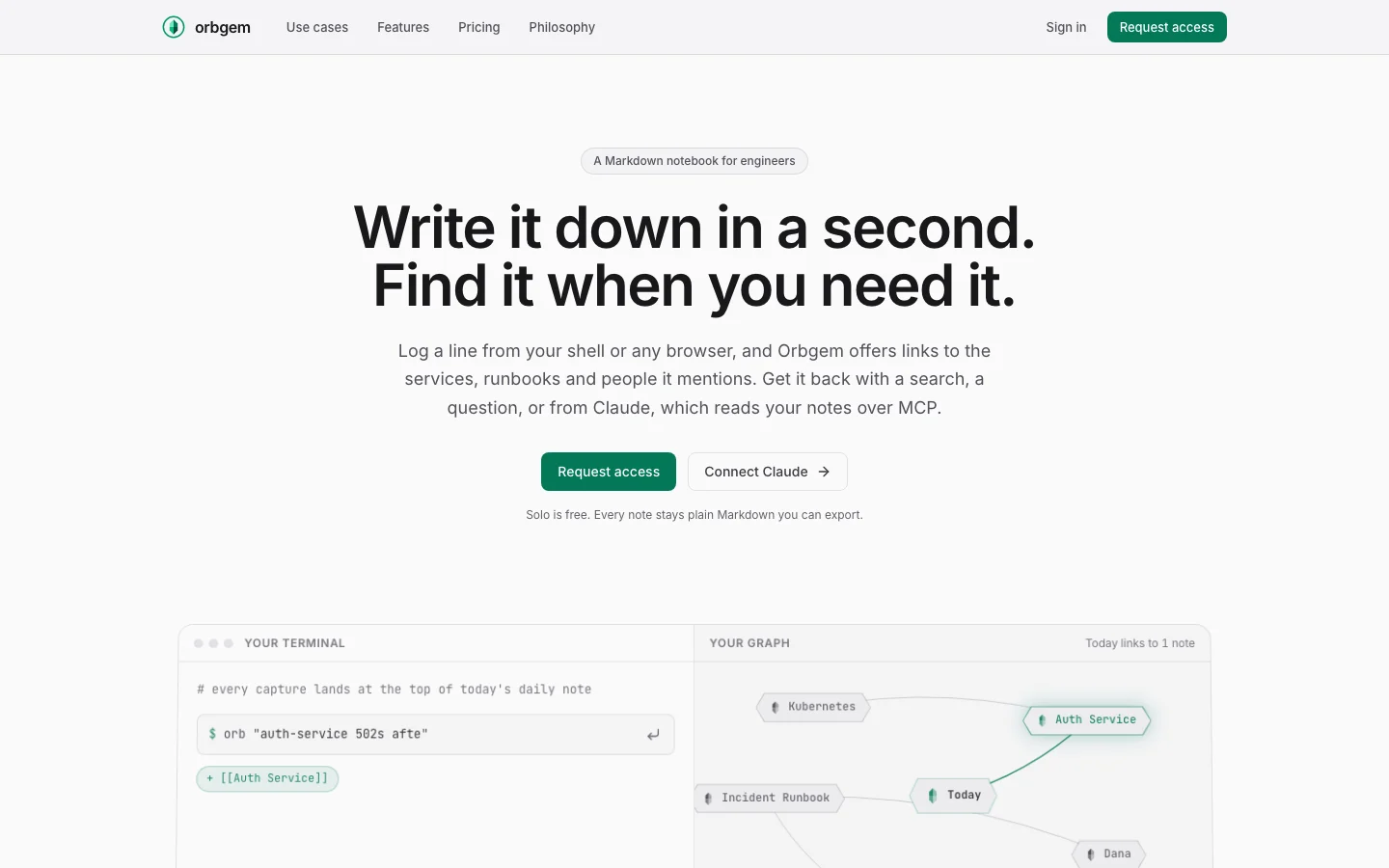
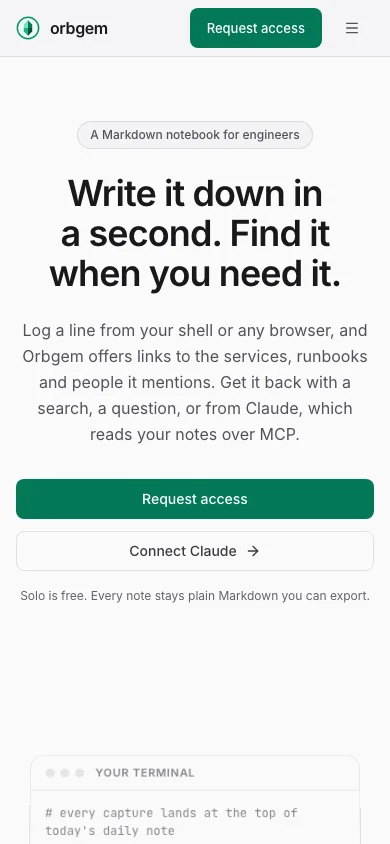
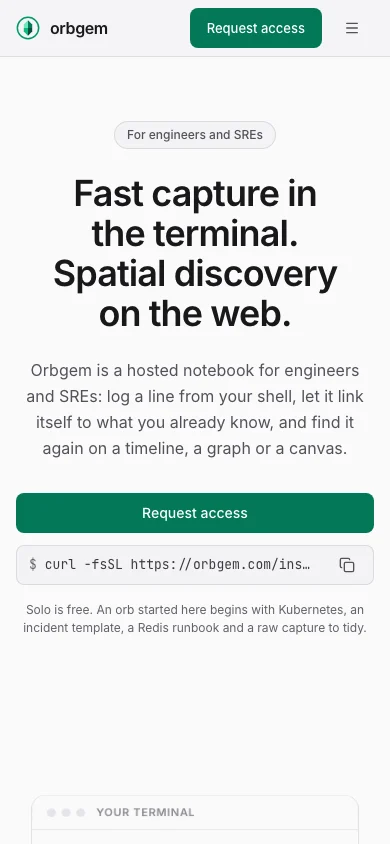
Log a line from your shell or the browser and it is a note, linked to the services, runbooks and people it mentions. Markdown stays the source of truth and the links, aliases and search are an index built from it, so the whole vault exports as plain files at any moment. Claude reads it over MCP, and Ask answers from your notes with citations on your own Claude, GPT or Gemini key.
- One Worker, one database, one Durable Object class and a React app
- Tenant isolation bound on every query, enforced by a gate
- Billing, nightly backups, a stage tier that holds no real accounts, and an unattended runner that ships it
How it leans on the blueprint
Edge ingressEdge ingressEvery request meets the edge first: TLS, caching, and the zero-trust door in front of the operator's controls.Tenant storePer-app databasesOne SQLite-class database per app, every statement bound to the tenant that owns the row.Autonomous runnerAutonomous runnerThe queue, the gate and the locked deploy that keep it shipping while nobody is watching.On the live site
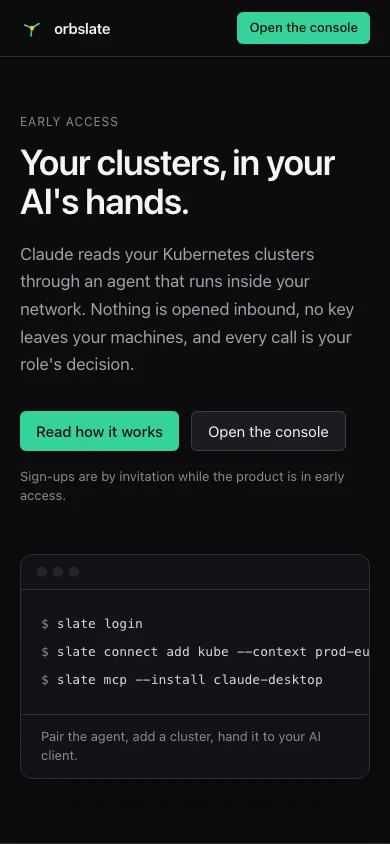
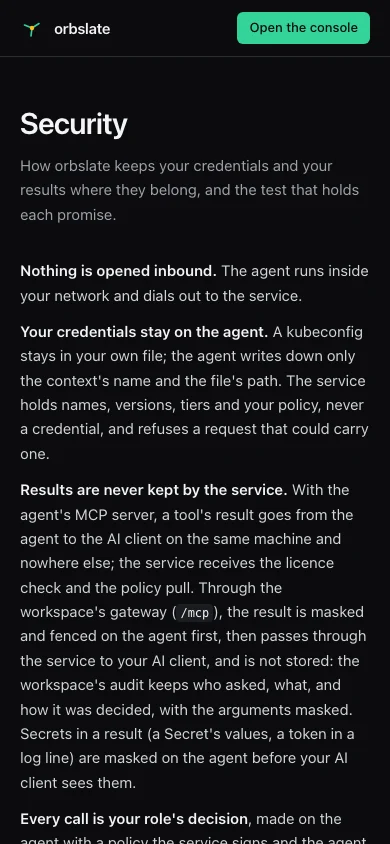
The public pages as they stand, at a desk and on a phone.
Product
Orbslate
Your clusters and monitoring, in your AI's hands
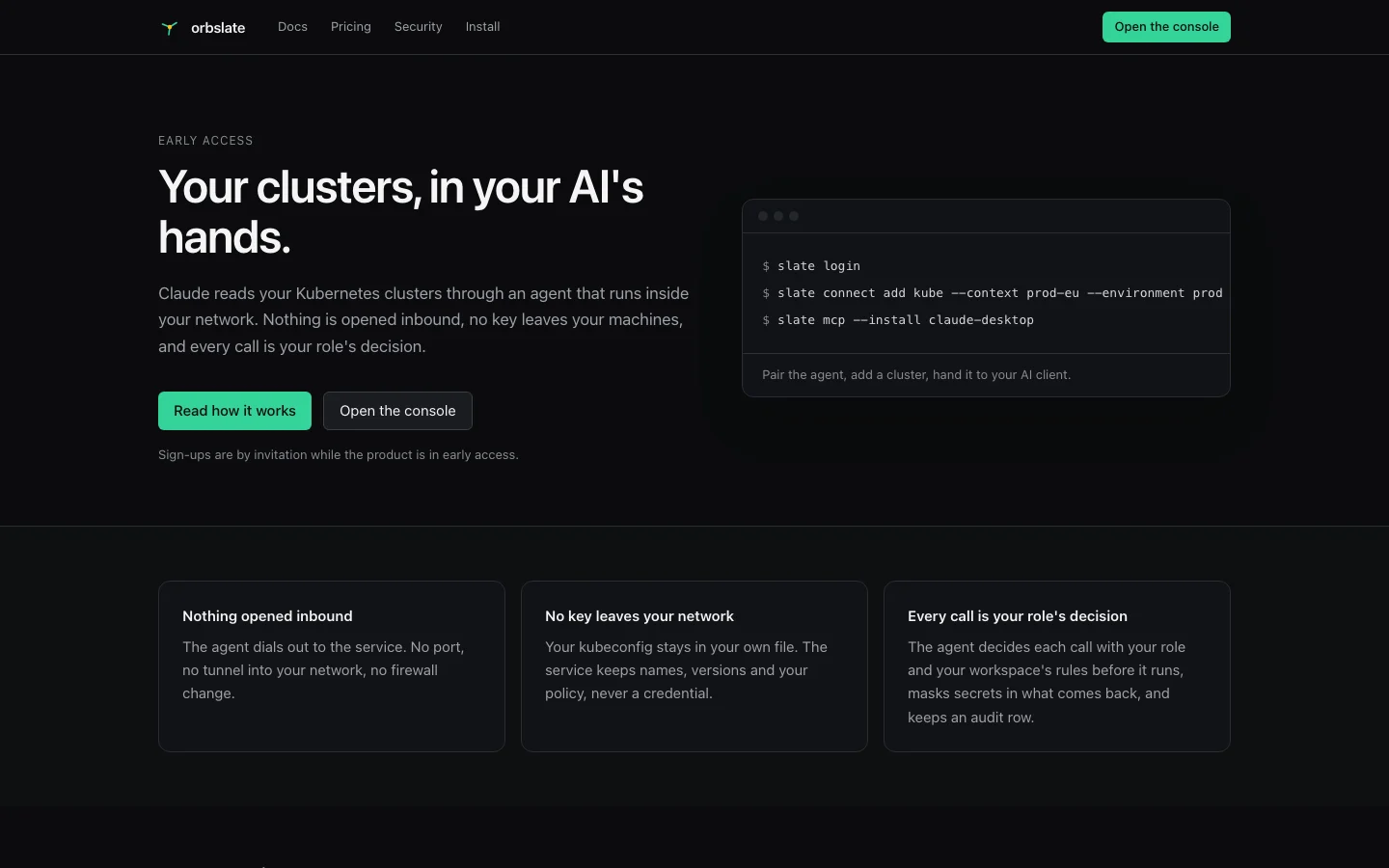
An agentic operations engine. A small agent runs inside your network and dials out, so nothing opens inbound and no key leaves your machines. Through it your AI reads cluster state, logs, metrics, open problems and pipelines, correlates them and troubleshoots in real time; where your role allows, it scales, restarts or rolls back. Your role decides every call, and the audit keeps it.
- Kubernetes clusters (Rancher and OpenShift among them), Datadog, Dynatrace and Harness
- Roles and a policy you draft, try in a Simulator and then publish, with an audit of every call
- Claude Desktop, Claude Code or Cursor on your own machine, or claude.ai as a connector
How it leans on the blueprint
Outbound onlyTunnelsThe agent dials out, as the platform's on-prem servers do: no port is opened and no credential crosses the network.Model contextModel context & inferenceEach tool is an MCP call your AI makes, decided by policy before it runs and masked before it answers.Tenant storePer-app databasesA control plane on one Worker and one database, every statement bound to the workspace that owns the row.On the live site
The public pages as they stand, at a desk and on a phone.
Product
Orbstrata
Every database you have, one map
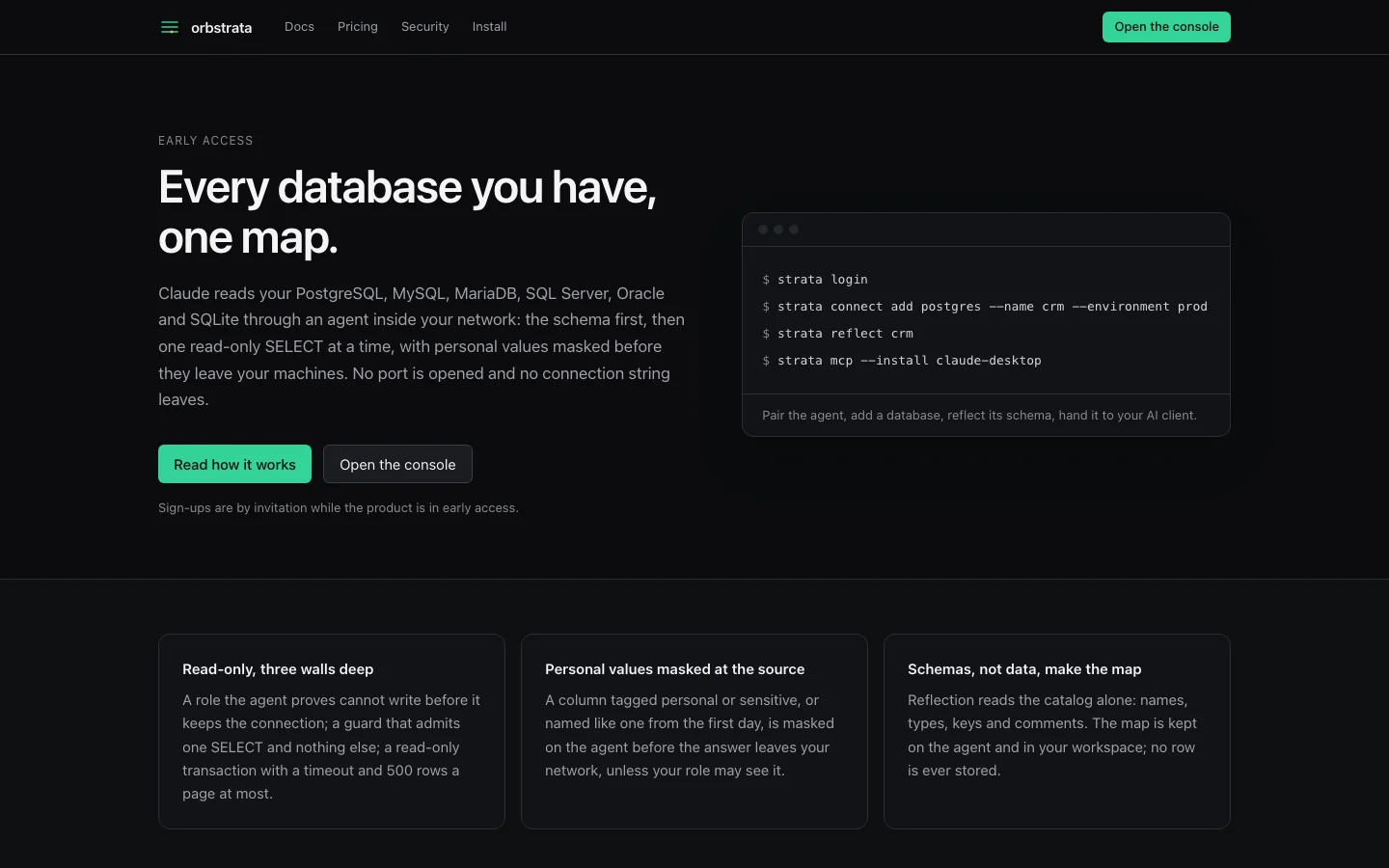
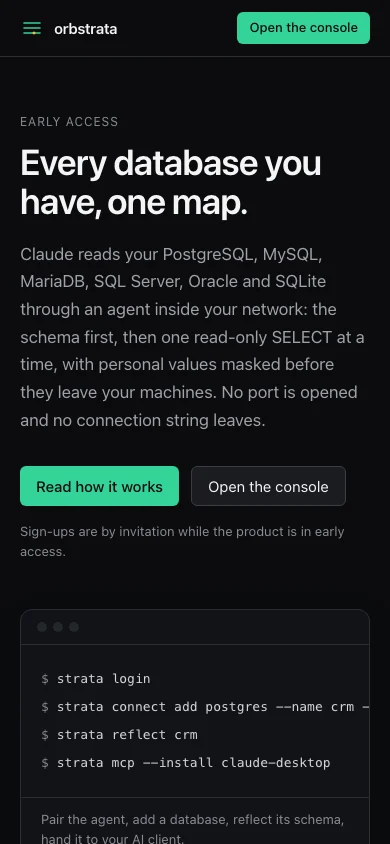
An enterprise data mesh engine built on a virtual semantic map. An agent inside your network reflects each database's schema where it lives (names, types, keys and comments, never a row) and tags its columns into one map across every source. Your AI then queries across them in real time and stitches one customer's records together from all of them, with personal values masked before they leave your network. Nothing is migrated.
- PostgreSQL, MySQL, MariaDB, SQL Server, Oracle and SQLite
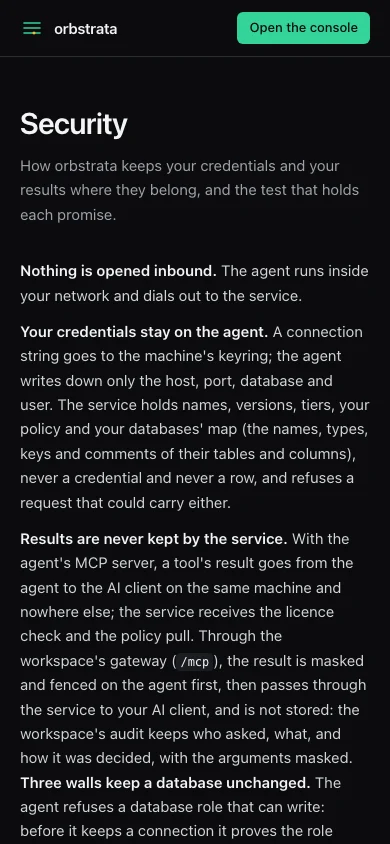
- Read-only three walls deep: a role proven unable to write, a guard that admits one SELECT, a read-only transaction with a timeout
- Tags your AI proposes wait for a person to keep or skip, and every statement is logged, never a row of its answer
How it leans on the blueprint
Outbound onlyTunnelsThe agent holds every connection string and dials out; the service never sees one.Model contextModel context & inferenceSchema, map and query tools your AI calls over MCP, the same shape as the platform's own servers.GateGateRead-only is a guard every statement passes through, and a test fails when anything goes around it.On the live site
The public pages as they stand, at a desk and on a phone.
System infrastructure
The platform
Fourteen apps on one edge, run by me and an agent
The private apps that gave the blueprint its shape: media libraries, an atlas, a game library, a vault, and a console that watches everything. They are not open to the public, but their architecture is, with the names made generic, on the Systems page.
- A byte store that spans on-prem servers, the edge cache and object storage
- Nightly backups that are restored in rehearsal, not just taken
- A registry of every host, job and cloud resource so nothing is ever called dead for being unfamiliar
How it leans on the blueprint
Byte storeByte storeCold tenants rest in object storage; hot media is served from on-prem servers through a tunnel and cached for a year at the edge.BackupsNightly backupsEvery database pulled nightly, the state root encrypted and pushed off-site, archive drives for the rest.On one edge
Its screens stay private, so here is its shape: fourteen Workers on one edge, each with its own database and stage. This site is one of them.
One edge · fourteen Workers · the rust dot is this site